 Call us on :+6589306547

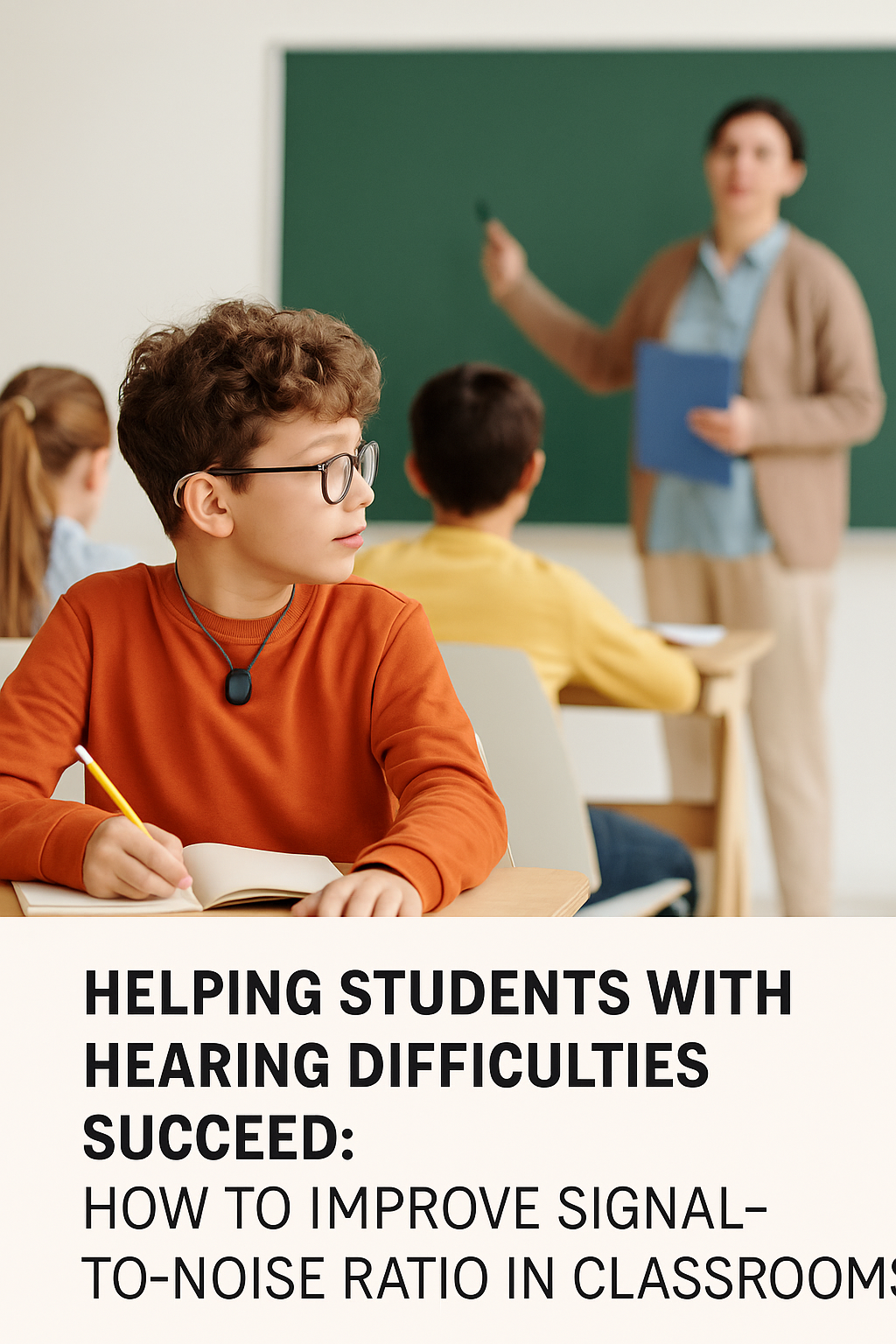
Helping Students with Hearing Difficulties Succeed: How to Improve Signal-to-Noise Ratio in Classrooms
Does your child struggle to hear or follow instructions in class — even with normal hearing tests?
They might be facing more than just “not paying attention.” Many students with Auditory Processing Disorder (APD), Autism Spectrum Disorder (ASD), or abnormal hearing struggle to hear clearly in noisy classrooms. This isn’t just frustrating — it can affect their learning, confidence, and social interaction.
Let’s explore how improving the signal-to-noise ratio (SNR) can help — and how devices like Roger™ microphones can make a big difference.
What Is Signal-to-Noise Ratio (SNR) and Why Does It Matter?
Imagine trying to hear a teacher’s voice over the hum of fans, other students talking, or scraping chairs. For most of us, our brains can filter out background noise. But for students with APD, ASD, or mild hearing loss, this can be overwhelming.
Signal-to-noise ratio simply means how loud the important sound (like the teacher’s voice) is compared to the background noise.
The higher the SNR, the easier it is to understand what’s being said.
Students Who May Struggle with Low SNR:
-
Children with APD: Their ears can hear, but their brains have difficulty making sense of sounds — especially in noisy environments.
-
Children with ASD: Many experience sensory sensitivities and may find background noise extremely distracting or upsetting.
-
Children with mild or undiagnosed hearing loss: They may not qualify for hearing aids, but still struggle in noisy classrooms.
How Can We Help? Roger Microphones and Classroom Audio Systems
One of the best ways to improve SNR is by using wireless microphone systems like Phonak Roger™.
How it works:
-
The teacher wears a small microphone.
-
The student wears hearing aids or a receiver connected to the Roger system.
-
The teacher’s voice is sent directly to the student’s ears, cutting through the background noise.
Benefits:
✅ Helps the student hear better — even from the back of the class
✅ Reduces listening effort and fatigue
✅ Improves focus, academic performance, and confidence
✅ Supports inclusive learning for children with special needs